


Paperwork and permits
Self-storage investment in Valencia: project economics and opening budget

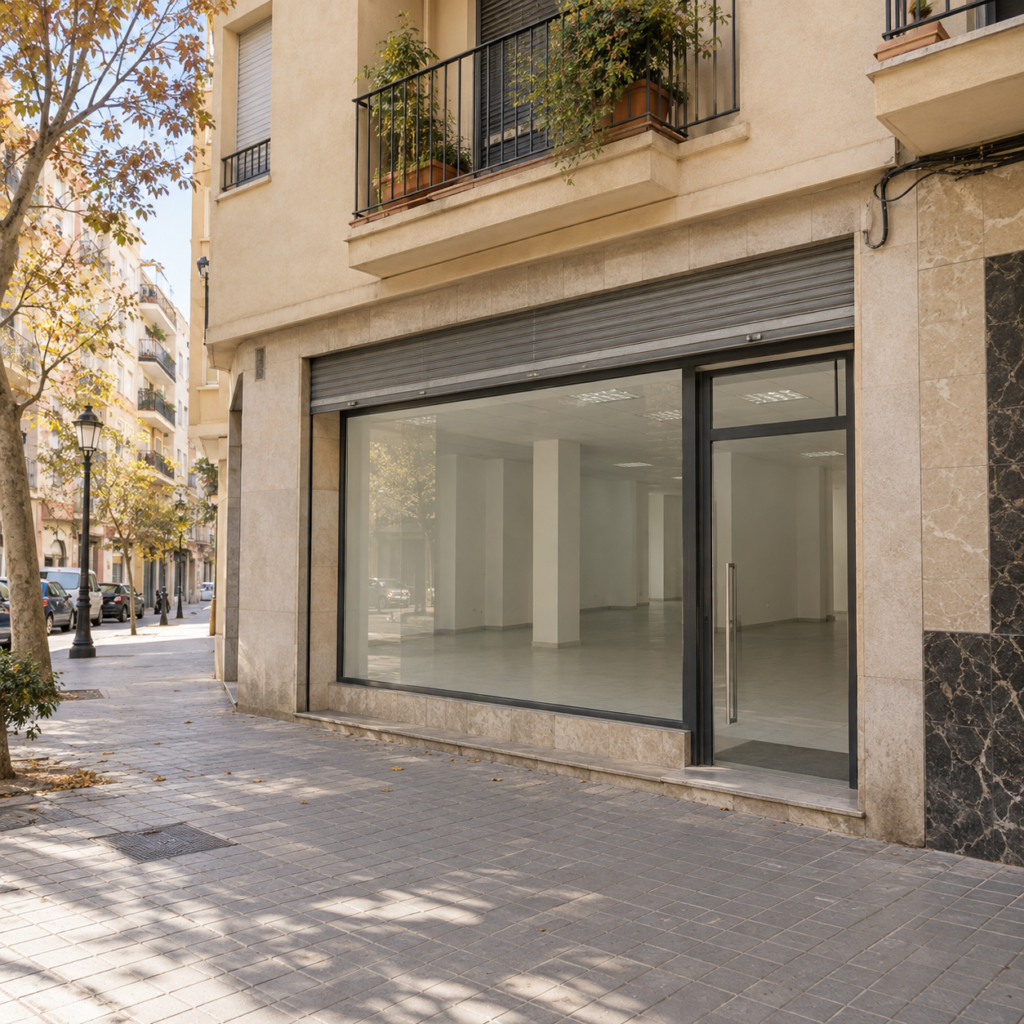
Commercial premises may be unsuitable for a shop yet work well for storing belongings. For an investor, this creates an opportunity to change the property’s use and its income potential. The additional income needs to justify conversion and management costs.
In the first article in the series, we looked at buying vacant premises for a storage-unit centre. Here, we explain why this type of project can be more attractive than a conventional lease and what affects the opening budget.
How the income model changes
A conventional lease requires one business that is comfortable with the entire property. An unappealing display window, a large floor area or the location can limit the pool of prospective tenants.
With self-storage, the space is divided into individual units. A customer needs somewhere for household belongings, equipment or stock, and rents only the space they need. In Spain, these units are known as trasteros. The combined rent from the units may exceed the rent for the premises as a whole.
However, corridors and service areas take up some of the space. Management, advertising, access systems and equipment maintenance add costs. What matters to the investor is income after these expenses, not just the total paid by customers.
A comparison using one hypothetical example
Take a 250 m² property in the Valencia metropolitan area. It can either be let as a whole or converted into a centre with 40 storage units.
All figures are hypothetical. They illustrate the investment idea and are not a market valuation, an actual NEXEVO project or a promise of returns.
The conventional lease scenario allows for one month of vacancy per year. The storage-centre scenario assumes average occupancy of 85% and rent of €95 per unit per month, excluding VAT. Both include operating expenses. Investment includes the purchase and transaction costs; for the storage centre, it also includes works, equipment and a reserve for the opening period.
The example assumes an all-equity purchase, with no loan. Income is shown before the investor’s income tax and substantial future capital expenditure. The storage-centre figures describe a year after the centre has reached its assumed operating occupancy, not the first year after purchase.
In this example, additional investment generates more income from the same property. For an actual property, the outcome will depend on the purchase price, the works budget and demand at the specific address.
Less reliance on one tenant
A commercial tenant may move out after six months. While the owner looks for a replacement, rental income stops, but some costs continue. Assuming uninterrupted payments for all twelve months would therefore be too optimistic.
With self-storage, one customer’s departure leaves one unit empty while other customers can keep paying. Units can be let gradually, without waiting for a single tenant to take the whole property.
This spreads vacancy risk, but does not eliminate it. The centre needs customers and management. During the opening period, occupancy is usually below the target, and costs start before the doors open. This period also needs to be included in the budget.
Hidden conversion costs in Valencia
The hypothetical budget in the example cannot be applied to every property. Even premises of the same size can require very different amounts of work.
If the property is dry, its building services are usable and the layout suits storage units, some work can be reduced. Preparing the property will then require less money.
At another property, a low purchase price may come with additional costs for:
- treating damp and carrying out repairs;
- replacing electrical or ventilation systems;
- meeting fire safety requirements;
- altering the entrance and arranging access;
- preparing documentation and obtaining the necessary approvals.
The usable potential of the floor area matters too. An efficient layout leaves more space to let. Columns, narrow passages or an awkwardly shaped property can limit the number of units.
For this reason, a more expensive but suitable property can sometimes be more attractive than a cheaper one requiring extensive works. For commercial property investment in Valencia, the specific address matters: customer access, nearby demand and competing offers.

How a NEXEVO assessment helps refine the investment budget
NEXEVO is a real-estate investment company. Work on a property includes assessing its condition and documents, the feasibility of the proposed use and the works required.
This assessment helps identify what can be retained, what needs replacing, which approvals are required and what layout can be implemented. These findings provide a basis for refining the preliminary property preparation budget.
The investor receives inputs for their own model: a substantiated conversion budget can be added to the purchase price, allowing total investment to be compared with anticipated income. The budget is refined as assessment and design progress; a contingency reserve is needed for unforeseen works.
If you are considering premises for storage units in Valencia, send NEXEVO the address, floor plan and available documents. Depending on the assignment, the company can organise design, repairs and fit-out, and coordinate approvals and the regularisation of works where applicable, with relevant specialists involved.
The third article in the series explains in more detail what to check before buying and which constraints may affect the opening of a storage centre.
Discuss a property assessment with NEXEVO
Frequently asked questions
No. Additional income needs to justify conversion and management costs. This must be assessed for each property.
No. It is hypothetical. Actual costs may be higher or lower depending on the property’s condition, documentation and layout.
By assessing the property and identifying the works required. These findings help the investor refine the total budget and decide whether to buy.
Keep reading

Self-storage in Valencia: property checks before buying
What to check before buying a Valencia property for self-storage: permitted use, fire safety, works and documentation.
Self-storage investment in Valencia: a new use for an empty commercial property
Could an empty commercial property work as self-storage? Assess local demand, conversion costs and property suitability in Valencia with NEXEVO.

Your Ibiza Property Has No Final de Obra: What to Do Next
No final de obra or cédula de habitabilidad on your Ibiza property? Here's what it blocks, why it happens, and how to fix it. Talk to…