


Real estate investment
Self-storage in Valencia: property checks before buying

The price looks attractive, residential neighbourhoods are nearby and the floor area appears large enough for storage units. At first glance, it seems a suitable investment property. Before buying, though, you need to establish whether self-storage can operate there and what works will be required to open it.
In the first article in the series, we explored the potential of vacant commercial premises. In the second, we compared self-storage with a conventional lease. Here, we examine the stage that helps turn an appealing idea into a prepared project.
Commercial premises do not automatically permit self-storage
The fact that a shop or workshop previously operated in the property does not confirm that a storage centre can open there. The proposed new use needs a separate assessment.
Before the transaction, it is worth reviewing:
- ownership and encumbrances;
- whether the documents match the property’s actual condition;
- previous alterations and their approval status;
- whether the proposed activity is permitted at the specific address;
- restrictions on works to the façade, entrance and shared parts of the building.
In the city of Valencia, the activity’s compatibility with planning rules is assessed through compatibilidad urbanística. This is not merely paperwork: an unfavourable finding can prevent the proposed use. The assessment procedure should be confirmed for the particular project. See the official Ayuntamiento de València procedure.
If the property is in Alboraya, Meliana or another neighbouring municipality, the relevant Ayuntamiento must be consulted. Being close to Valencia does not mean the same local rules apply.
The layout determines how much space can earn rent
The seller’s plan shows the total floor area. An investor needs to know how much will remain lettable after corridors and service areas have been provided.
A preliminary unit layout is therefore needed before buying. It shows whether the premises will be convenient to use and how efficiently the space can be arranged.
A specialist also assesses the property’s condition: damp, signs of leaks, electrical installations, ventilation and safe escape routes. For lower floors and basements, flood risk should be assessed separately.
These issues directly affect the investment budget. Usable building services and a suitable layout can allow some existing equipment to be retained. Hidden defects or major alterations increase costs. An assessment can reveal opportunities to avoid unnecessary works as well as problems.
Fire safety affects the budget before refurbishment begins
Installing partitions and doors is not enough. A storage centre’s layout must take fire safety requirements into account.
Real Decreto 164/2025 explicitly classifies establishments providing storage-unit and warehouse rental as Almacén use for the purposes of DB-SI. Solutions adopted for a former shop therefore cannot automatically be carried over to the new project. The designer determines the specific requirements based on the property’s characteristics and the applicable transitional provisions.
For the investor, the practical point is straightforward: escape routes, fire compartmentation and protection systems need to be considered when planning the units. Otherwise, an already prepared layout may need to be changed along with the cost estimate.
Approvals and refurbishment need one coordinated plan
There is no single opening procedure for every self-storage facility. The Valencian Community has different procedures for starting an activity, including an environmental licence, an environmental declaration of compliance and notification for activities with no environmental impact. The appropriate procedure depends on the project. The main reference is Ley 6/2014.
The procedure for authorising building works is determined separately. Starting refurbishment on the assumption that the paperwork can be sorted out later is therefore risky.
Before opening, it is useful to agree the sequence:
- review the documents and whether the proposed use is permitted;
- prepare the layout and technical design;
- refine the budget, required procedures and timetable;
- carry out the works in accordance with the approved project;
- prepare the documents required to start the activity.
Investment is not limited to construction. While the property is being prepared for opening, the owner incurs costs without rental income. The overall budget needs funds for this period and a contingency reserve for unforeseen works.
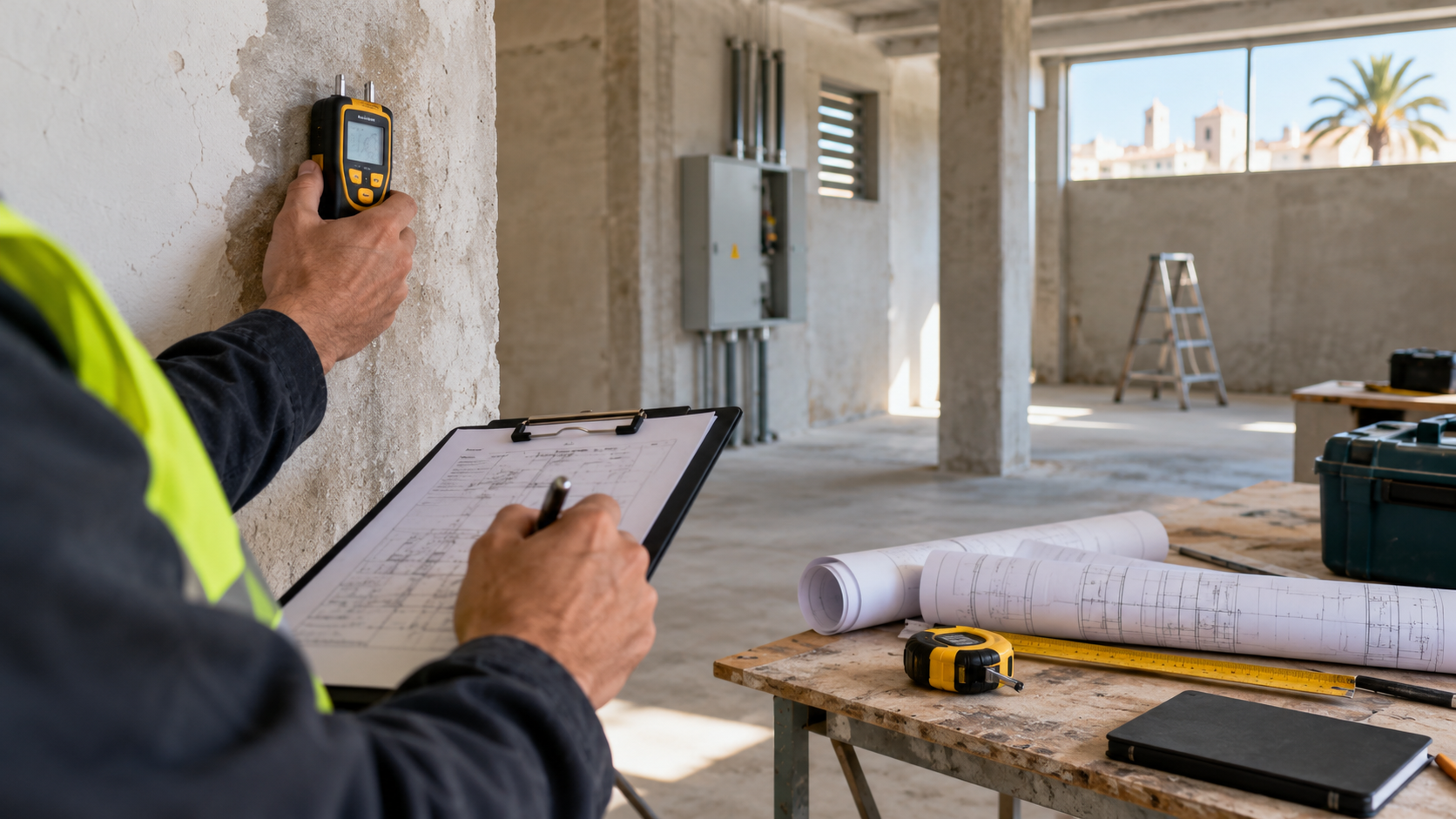
NEXEVO helps define the property preparation works
NEXEVO is a real-estate investment company. For premises intended for self-storage, its role concerns assessing the property and organising its preparation.
Depending on the assignment, support may include a property survey, document review and the coordination of design and approvals. Where procedures for regularising existing works are applicable, their feasibility is assessed first. Relevant specialists are brought in for legal matters; a subsequent stage may involve refurbishment and fit-out.
The findings give the investor a basis for refining the project’s economics: the possible lettable area, the required works and a preliminary preparation budget. That budget is refined through assessment and design; it is not a final price established after the first viewing.
If you are considering commercial property in Valencia for a storage centre, send NEXEVO the address, floor plan, asking price and available documents. This will allow a discussion of the property assessment and the issues to resolve before the transaction and the start of works.
Frequently asked questions
It is a possible use, but the previous activity does not confirm that the new one is permitted. Document and technical checks are needed.
Possibly, if the works and building services suit the new use. A property that looks well maintained still needs an assessment.
No. The possibility depends on the alterations and the applicable requirements. A favourable outcome cannot be promised before an assessment.
Preferably before buying, while it is still possible to compare the property’s potential with its price and anticipated costs.
Keep reading

Self-storage investment in Valencia: project economics and opening budget
A hypothetical self-storage investment example in Valencia: vacancy, conversion costs and property assessment before purchase.
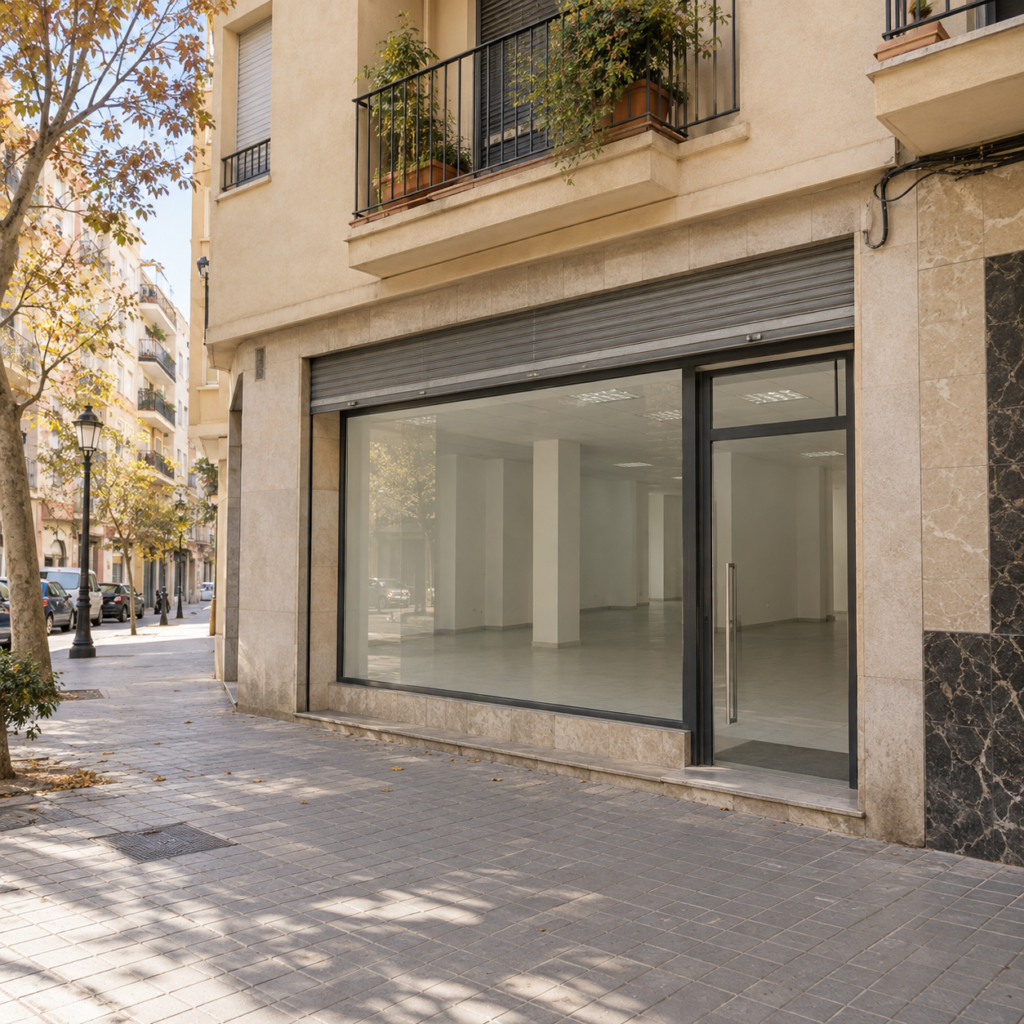
Self-storage investment in Valencia: a new use for an empty commercial property
Could an empty commercial property work as self-storage? Assess local demand, conversion costs and property suitability in Valencia with NEXEVO.

Your Ibiza Property Has No Final de Obra: What to Do Next
No final de obra or cédula de habitabilidad on your Ibiza property? Here's what it blocks, why it happens, and how to fix it. Talk to…